
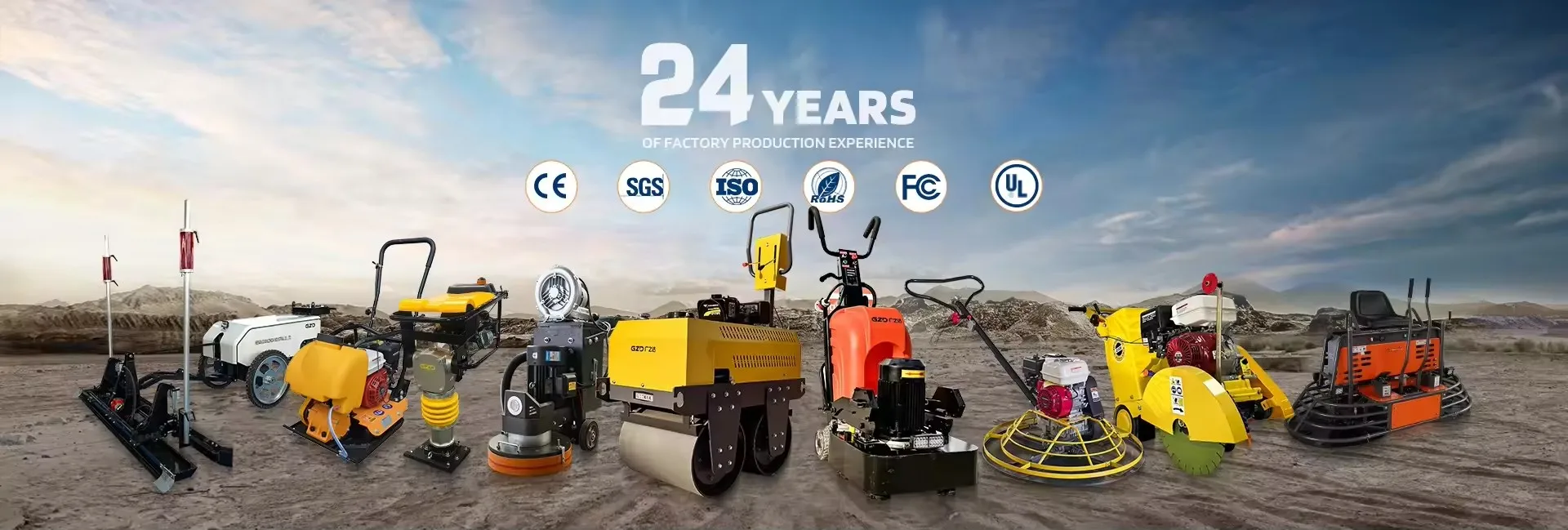


To the untrained eye, an earth tamping rammer machine looks like a noisy, chaotic pogo stick. But as someone who has spent hours rebuilding these lower units on the tailgate of a service truck in the freezing rain, I look at them as marvels of kinetic engineering. The magic of this machine lies entirely in how it translates the high-speed rotational energy of an engine into a violent, linear impact force capable of shattering the molecular bonds of heavy clay.
The process begins at the top. The engine runs at roughly 3,600 to 4,000 RPM. Attached to the engine's output shaft is a centrifugal clutch. When the operator squeezes the throttle, the clutch shoes expand outward, engaging a drum that connects to a pinion gear. This pinion drives a much larger crank gear inside the main housing, effectively reducing the speed and multiplying the torque. Attached to this crank gear is a connecting rod that moves up and down.
Here is where the real engineering brilliance happens: the connecting rod does not bolt directly to the tamping shoe. If it did, the sheer shock of hitting the ground would shatter the engine block into a thousand pieces in minutes. Instead, the connecting rod drives a heavy steel piston inside a sealed cylinder. Nestled beneath and above this piston is a dual-coil spring system. As the connecting rod pushes the piston down, it compresses the heavy lower springs. For a fraction of a millisecond, those springs store immense kinetic energy. When the springs finally decompress, they violently fire the entire lower shoe assembly into the dirt with a force often exceeding 1,500 kg [approx. 3,300 lbs] of impact per strike. Understanding this internal dance is crucial for an operator; your job isn't to force the machine into the ground, but simply to guide it, allowing the engine to load the springs, and letting the springs do the brutal work of consolidating the lift.


