
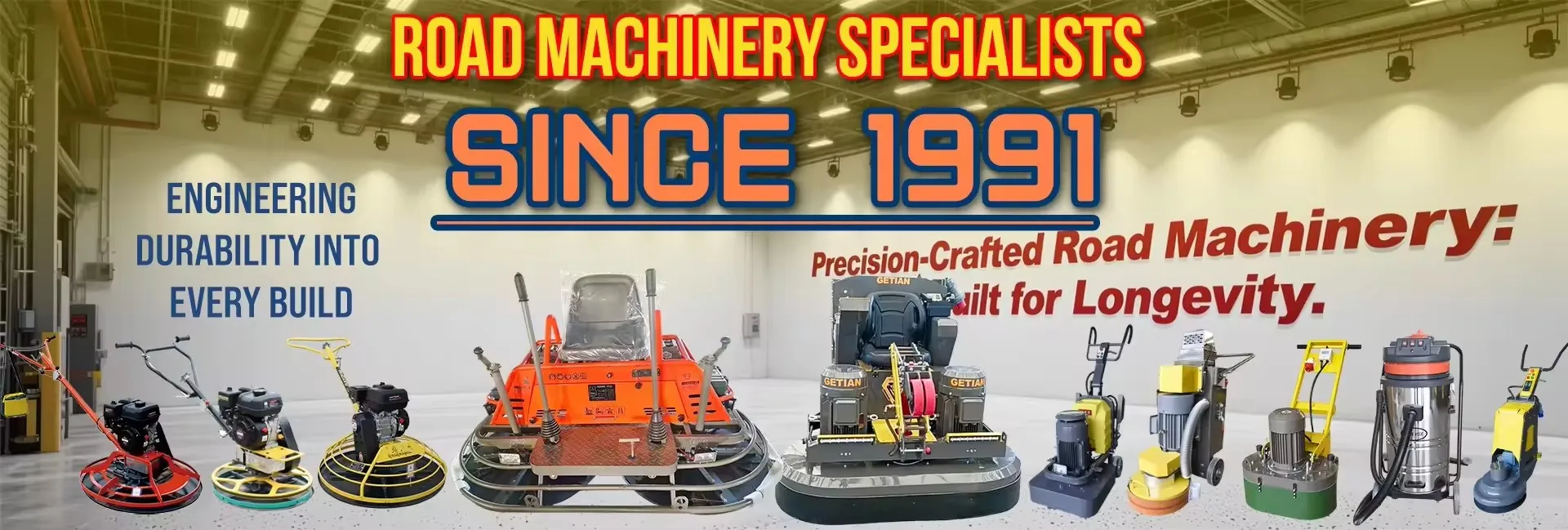
If you look at walk-behind rollers from thirty years ago, they were mechanical nightmares. They relied on a complex system of chains, sprockets, and mechanical clutches to drive the drums. When I operated those old machines on fresh asphalt, the mechanical clutch would engage with a violent jerk, digging a deep divot into the hot mat that I would then have to spend an hour trying to iron out. The modern era of the fully hydrostatic walk-behind roller has completely changed the game, providing a level of surgical control that we used to only dream of.
In a hydrostatic drive system, the gasoline or diesel engine does not connect mechanically to the drums. Instead, the engine turns a high-pressure hydraulic pump. This pump sends pressurized hydraulic fluid through heavy-duty hoses directly to hydraulic motors mounted inside the drums. The operator controls the flow of this fluid using a simple forward/reverse lever on the handle. When I push the lever slightly forward, a tiny amount of fluid passes, and the roller creeps forward at a snail's pace. If I push it all the way, it moves at full transport speed—usually around 4 km/h [approx. 2.5 mph].
This infinitely variable speed control is crucial for asphalt work. I can ease into a forward motion with zero jerking, ensuring the drums roll smoothly over the tender HMA without creating waves or tearing the surface. Furthermore, hydrostatic systems are self-braking; the moment I return the lever to the neutral position, the hydraulic flow stops, and the machine locks in place. It eliminates the maintenance headache of tensioning drive chains and greasing exposed sprockets that are constantly subjected to abrasive dirt and hot asphalt.


